This guide helps riders in Australia waterproof an electric scooter and ride an electric scooter more safely when showers roll through. We explain what an ip rating really means and show simple steps that prevent water entering key components. If you are caught in the rain, you will know how to act and how to dry the scooter. Ready to protect your electric scooter and keep rolling? Let’s begin.
What IP rating means for an electric scooter
An ip rating describes tested protection against water and dust so you can judge the level of water resistance your electric scooter can handle in light rain and water splashes. It is part of ingress protection ratings used across the electric vehicle world.
When it comes to electric scooters, the numbers matter. Many electric scooters list ip54, which indicates limited dust protection and resistance to splashes from any direction. This does not mean fully waterproof, and it does not mean a scooter can be submerged. The electric scooter’s seals, the charging port, and the controller box decide how much exposure to water the scooter can handle in real life. Modern electric scooters improve sealing but higher ip ratings are still the clearest shorthand.
Quick definitions
- IP54 rating: splash resistant, not submersible.
- Ingress protection: the standard that defines protection against water and dust.
- Electric scooter IP: shorthand brands use to summarise water protection.
Prep steps to waterproof your e-scooter
Simple waterproofing measures reduce water ingress at common weak points and help prevent water reaching sensitive parts. Focus on the charging port, deck seams and the display controls to waterproof your electric scooter at home.
Start at the deck. Use silicone around cable exits, under the deck plate and along tiny gaps where splash paths form. Add a snug charging port cap and a dab of dielectric grease so the contact with water is less likely to cause short circuits. Where the stem meets the deck, a thin bead of silicone can make your electric scooter more resistant to water and reduce vibration-induced gaps over time. These steps make your electric scooter less vulnerable to water without heavy mods.

Target areas to seal
- Deck plate edges and screw holes to block ingress.
- Charging port collar and rubber cover to improve water protection.
- Controller housing and display gasket to keep your electric scooter dry.
- Brake light cable exits to ensure your scooter stays reliable.
Riding in wet conditions and safety
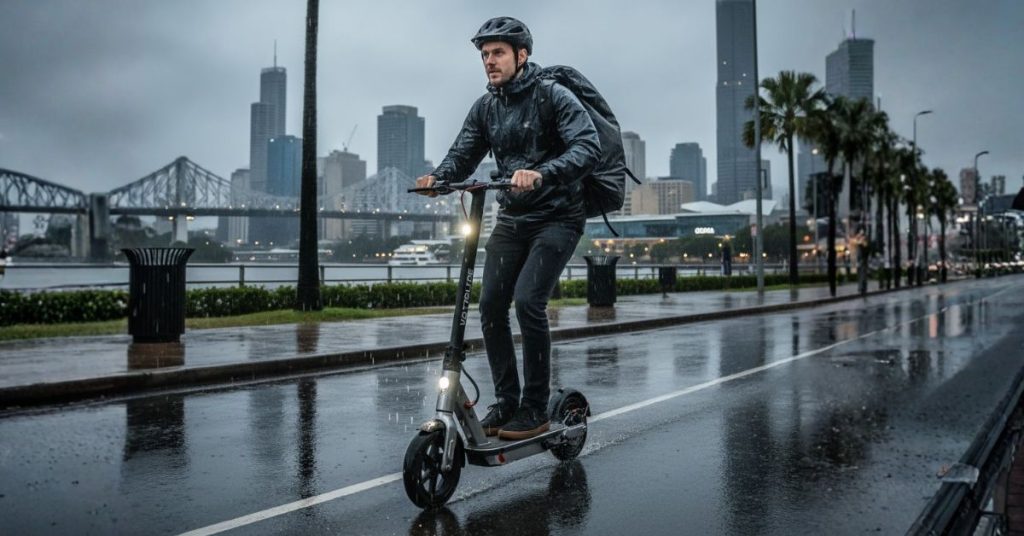
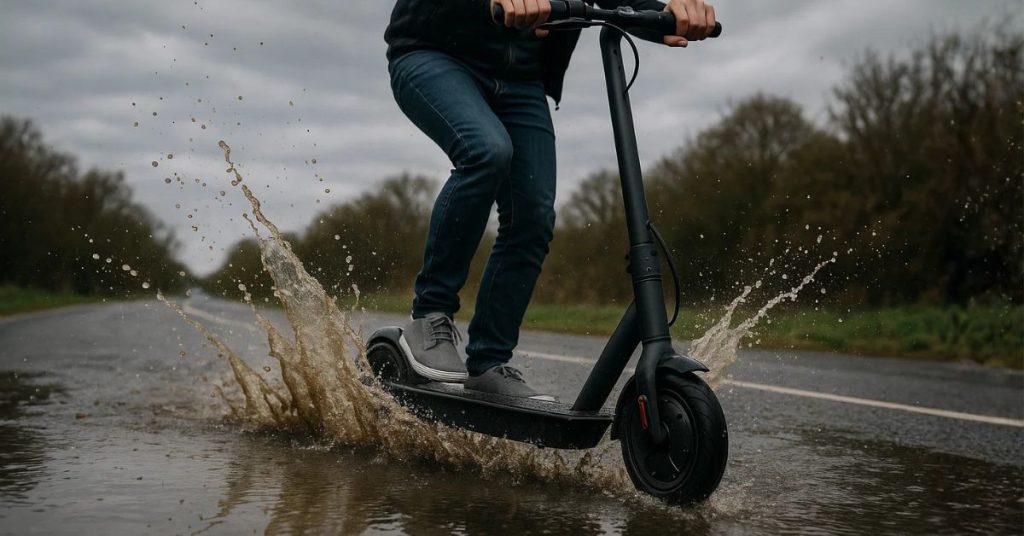
Riding in wet means change your technique to keep traction, visibility and stopping distance under control while you scooter safely to your destination. Slow down, lengthen gaps and avoid any puddle you cannot read.
Treat wet weather as a different surface. Tyres lose grip on paint and metal; a sudden splash can mask a pothole that bends a rim. If heavy rain starts, it’s recommended to ride toward cover and reassess. Choose routes with less standing water and avoid cutting through a deep puddle that hides hazards. A quick scenario: you see a shiny stretch near the curb. Assume it is deeper than it looks, bypass it, and keep your electric scooter upright. If the scooter doesn’t feel planted, step off and walk.
On-ride checklist
- Keep steering inputs smooth to withstand water-film slips.
- Feather brakes early; water and moisture extend stopping distances.
- Use lights and hi-vis so many scooters around you can see you.
- Plan turns gently in rain and splashes.
Cleaning and post ride care
Prompt care after a scooter in the rain reduces corrosion and keeps components healthy so you extend the lifespan of your ride. The goal is to remove grit, dry the scooter and stop water damage from creeping into the circuit board.
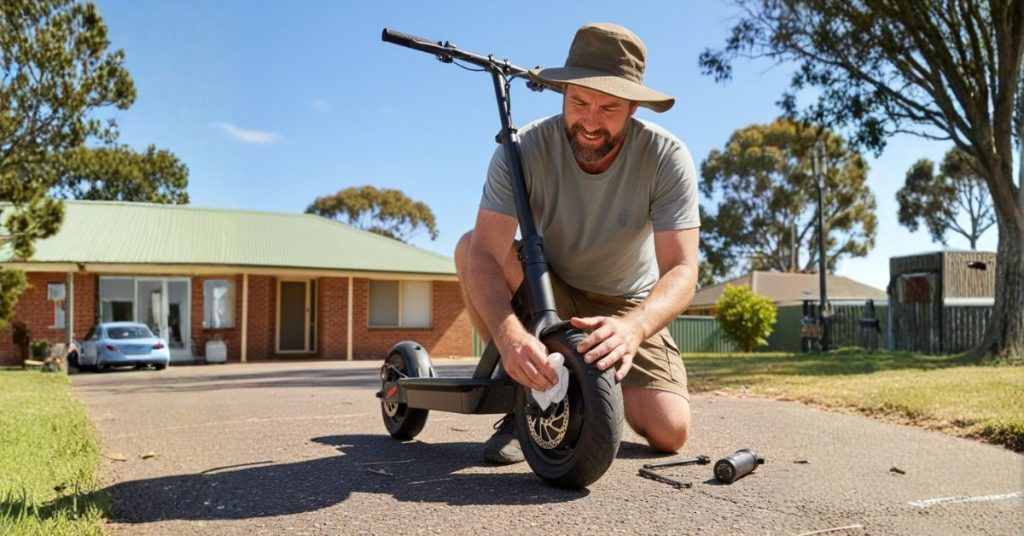
Wipe the frame with a damp cloth, then a dry towel. Avoid blasting bearings with high pressure as exposure to water can drive grit inside. Open the deck only if necessary, then air out the cavity so water ingress does not linger. Clean your electric scooter with mild bike wash, then relube moving parts. Finally, keep your electric scooter stored indoors.
After-ride routine
- Power off before cleaning to avoid contact with water on live parts.
- Pat the charging port dry and re-cap it.
- Inspect for corrosion and re-seal silicone if cracks appear.
- Store elevated to aid airflow and keeping your scooter dry.
Choosing a more water resistant model
If you ride in rain or wet regularly, consider models with higher ip ratings because scooters offer superior protection against water at the design level. Look for waterproof ratings that clearly describe the degree of water resistance instead of vague claims.

Brands sometimes advertise a waterproof electric scooter, but read the small print. Many scooters are rated ip54, while a few move higher for better water protection. This does not mean you should ride through a storm; it signals ability to withstand water from splashes. Compare warranties and note any clauses about riding electric scooters in severe weather conditions.
Spec comparison table
| Feature | Typical ip54 | Higher rating |
|---|---|---|
| Ability to withstand water | Splash only | Improved splash jets |
| Water and dust test | Basic | Stricter ingress tests |
| Use case | Light rain commute | Frequent wet conditions |
Troubleshooting water damage
If your electric scooter was an electric scooter in the rain and now behaves oddly, act fast to protect your electric scooter from further harm and avoid short circuits in hidden places. Early steps can save parts and money.
Power off immediately and do not charge. Remove external moisture, then gently open accessible panels to check the controller cavity. If you spot droplets near the circuit board, wick them up and leave the deck open in a warm, dry room. Don’t use heat guns. If performance remains erratic, seek a technician who services many electric scooters and understands ingress checks and sealing.
What to check first
- Battery leads and connectors for corrosion or burn marks.
- Display and throttle for water entering via buttons.
- Wiring grommets for gaps that allow water ingress.
When this may not be the right fit
Waterproofing is useful, but if your commute crosses flood zones, or you face heavy rain most days, don’t ride your electric scooter until conditions improve. A bicycle with full guards or public transport may suit days with severe storms. If you require fully waterproof equipment, consider alternatives designed for immersion rather than an e scooter with add-on seals.
How to judge if you need this now or later
Decide based on how often your route sees wet weather, where you store the scooter, and how exposed your paths are to spray. If your parking spot is outdoors or your roads pool water, make your electric scooter more resilient now. If you ride only in dry seasons, schedule sealing alongside a regular service so you keep your electric scooter maintained without rushing.
Simple decision cues
- You often meet light rain on commutes.
- Your path includes frequent rain and splashes from traffic.
- You need to ensure your scooter survives an occasional splash.
Where this connects to scooter maintenance next steps
Waterproofing ties into routine checks, tyre care and charging habits that ensure your scooter stays reliable year-round. Add seal inspection to the list when you service the brakes and tighten hardware so the scooter can handle daily use.
Next steps are straightforward. Book a quarterly check, inspect silicone lines, and confirm the charging port cap still grips. Revisit your route choices and storage so the scooter’s waterproofing remains effective. This habit helps you avoid water entering sensitive parts and supports your plan to extend the lifespan of your electric scooter.
Frequently Asked Questions
Pro tips and reminders
- Use silicone sparingly to seal, not glue, so service remains easy.
- Avoid standing water where ingress risk spikes.
- Use waterproof bags for spares and an extra towel to dry touchpoints.
- If unsure after contact with water, let a technician inspect the scooter regularly.
Safety and responsibility
Your electric scooter’s safety depends on sensible choices. If conditions worsen, riding in the rain can turn risky quickly. In that case, don’t ride your electric scooter and seek shelter.
Closing thought
This electric scooter guide gives you practical waterproofing steps and realistic expectations. Follow these waterproofing measures, respect the limits of your model, and you can make your electric scooter more resistant to water without over-promising. If you want personalised help to make my electric scooter last through unpredictable showers, book a local service today.

Featured Products