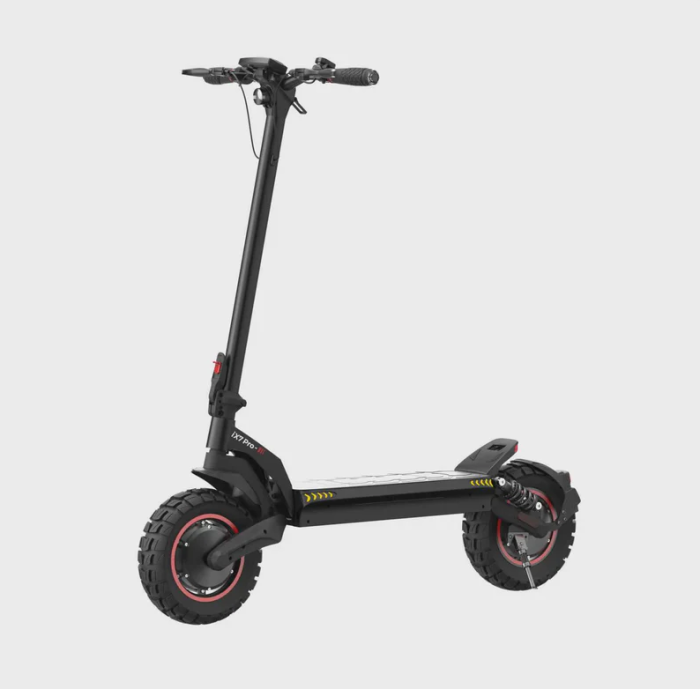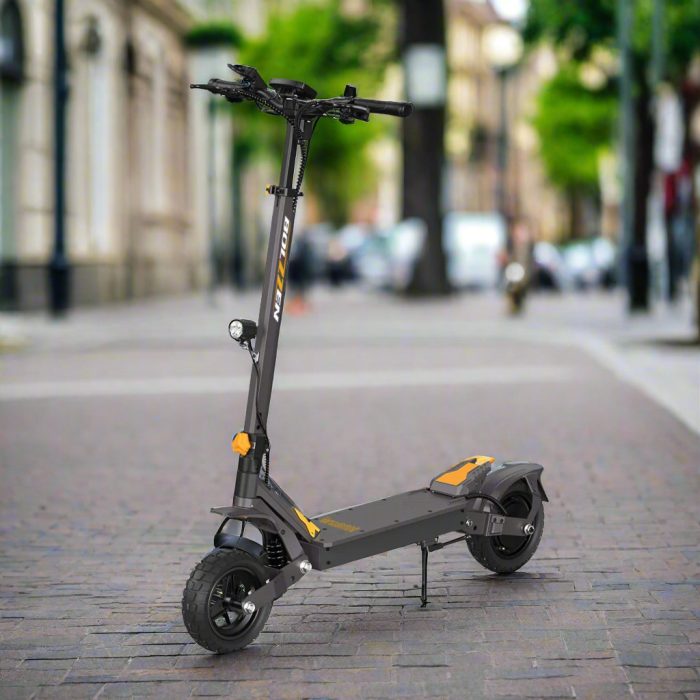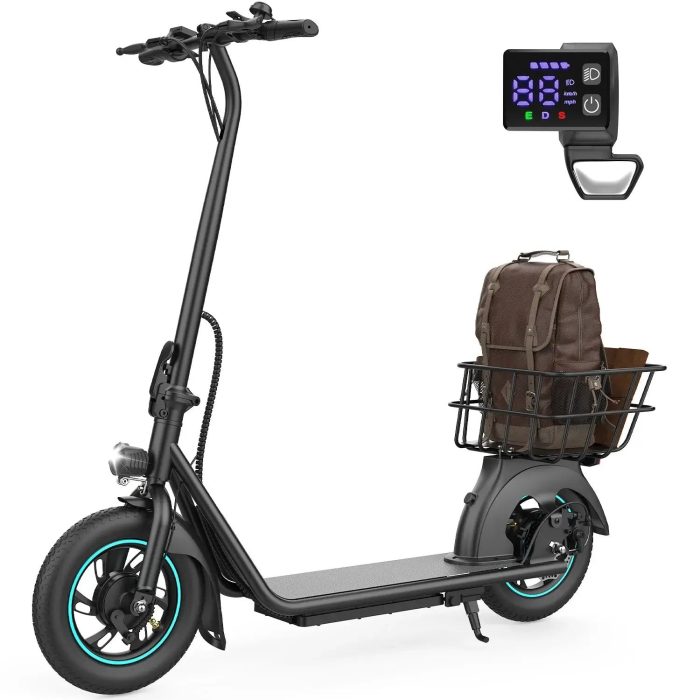
Choosing the right tyre for your electric scooter shapes how stable it feels on corners and how confidently it grips the road. A well-matched tyre size also improves ride quality and reduces wear and tear over time. This guide gives scooter riders everything they need to navigate tyre size terms, tyre types, tread patterns, and real-world riding considerations. If you’re planning an upgrade or replacing worn tyres, start here for a clearer path forward. For help choosing the right fit, get in touch.
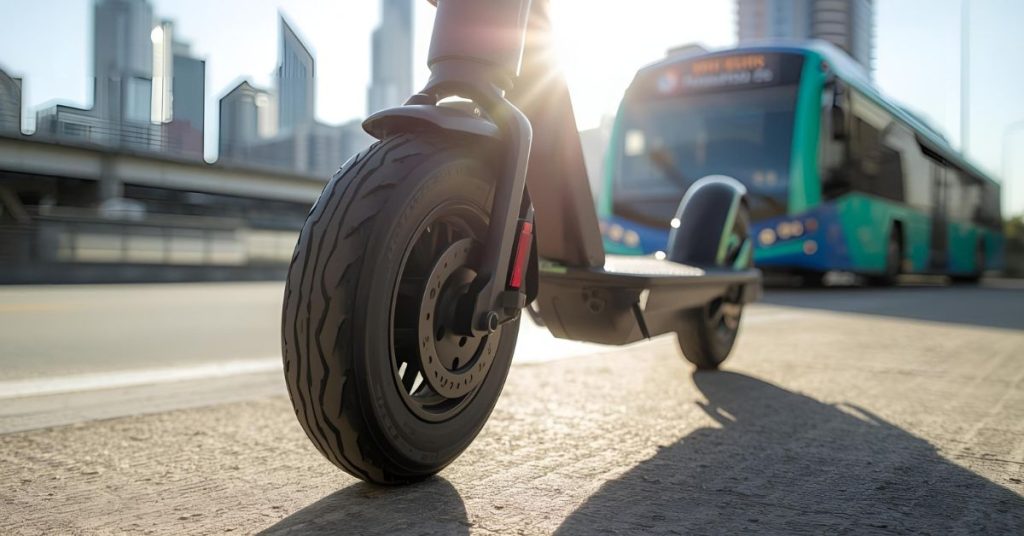
What tyre size means for an electric scooter
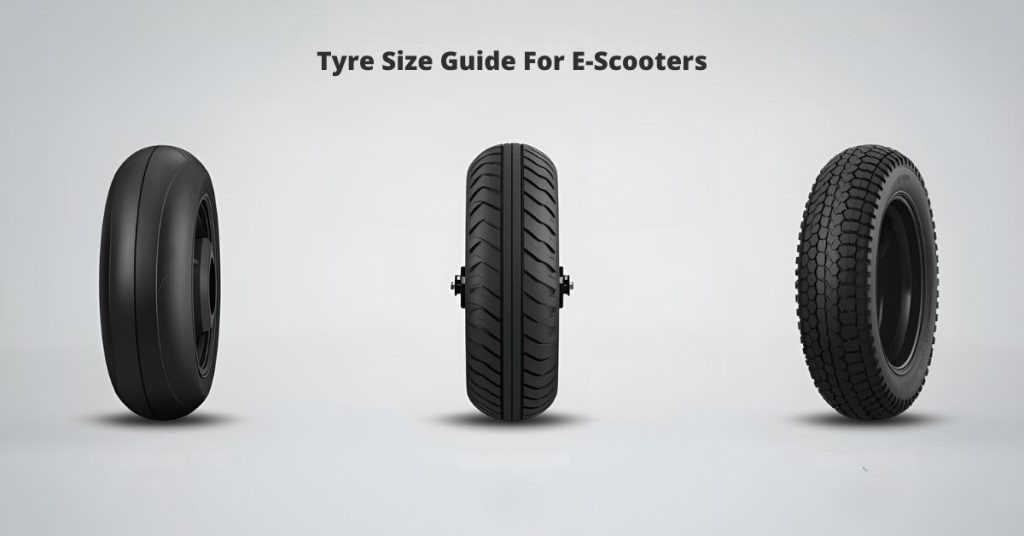
Tyre size describes the diameter and width of the tyre, and these measurements influence how the electric scooter behaves on different terrain. The size affects acceleration, stability, and rolling resistance. A larger tyre can smooth rough surfaces while smaller tires may sharpen handling.
Most e-scooters list tyre size on the outer tire or in the product manual. Many commuter scooter models sit around the popular 8 inch category, although premium fast electric scooters may use 10 inch wheels. Tyre size also shapes the contact patch with the ground, which determines traction and steering confidence.
In practice, tyre size for your electric scooter comes down to balance: a size offers stability, yet scooters with larger wheels usually deliver a more comfortable ride. Riders buying tyres for your needs should verify the correct size printed on both the front and rear tyre.
Short list:
- Diameter influences comfort and shock absorption.
- Width shapes contact with the ground and traction.
- Larger tires generally offer better stability but add weight.
What is the standard way tyre sizes are written?
Most tyres display measurements like “8.5×2.0”, indicating diameter and width.
Does tyre size affect speed?
A larger tyre can slightly change effective gearing, influencing acceleration and top speed.
What if the tyre markings are worn?
Check the scooter manual or contact the retailer for correct size details.
Can you upgrade to a bigger tyre?
Yes, as long as clearance and fork design support the bigger tyre.
Do different brands measure tyres differently?
Most follow the same standards, though formats may vary.
How different types of tyres affect ride quality
Tyre construction shapes traction, comfort, stability, and shock absorption. The main types include pneumatic tyres, solid tires, tubeless tires, and honeycomb options, each suiting different riding priorities.
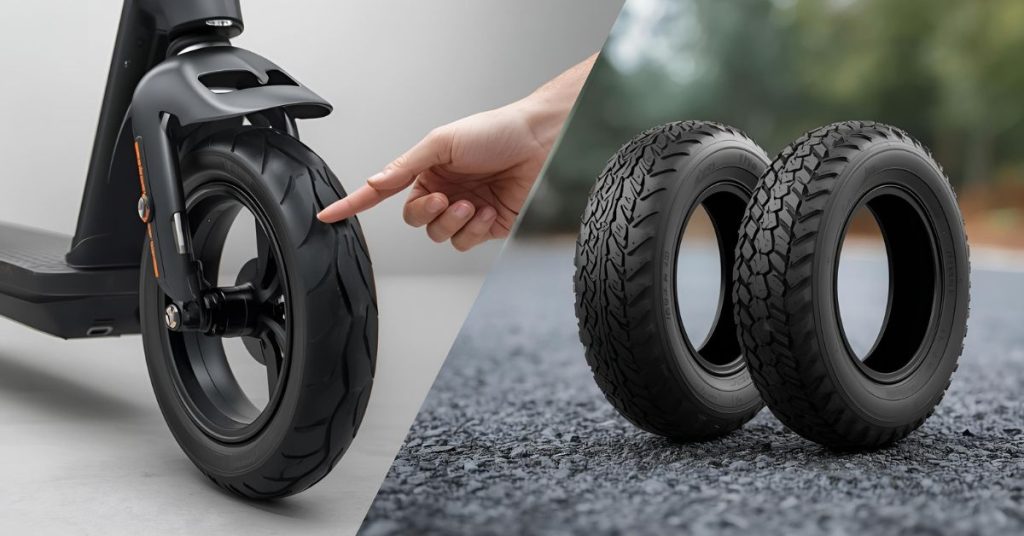
Pneumatic tyres are air-filled and well known for offering better shock absorption on uneven paths. They’re common on a wide range of electric scooters because they improve ride comfort on rough terrain. Solid tires feature rubber compounds that avoid puncture risk, but they reduce ride comfort compared to air-filled tires. Honeycomb tyres are also an option, combining airflow pockets with a solid structure.
For commuting, pneumatic tires offer a smoother and more comfortable ride, while solid tires may appeal to riders chasing zero puncture maintenance.
Comparison table:
| Tyre type | Comfort | Puncture risk | Best for |
|---|---|---|---|
| Pneumatic | High | Higher | Everyday commuting |
| Solid | Low | Very low | High-puncture areas |
| Honeycomb | Medium | Low | Urban mixed terrain |
 Why tread and terrain matter for e-scooters
 Why tread and terrain matter for e-scooters
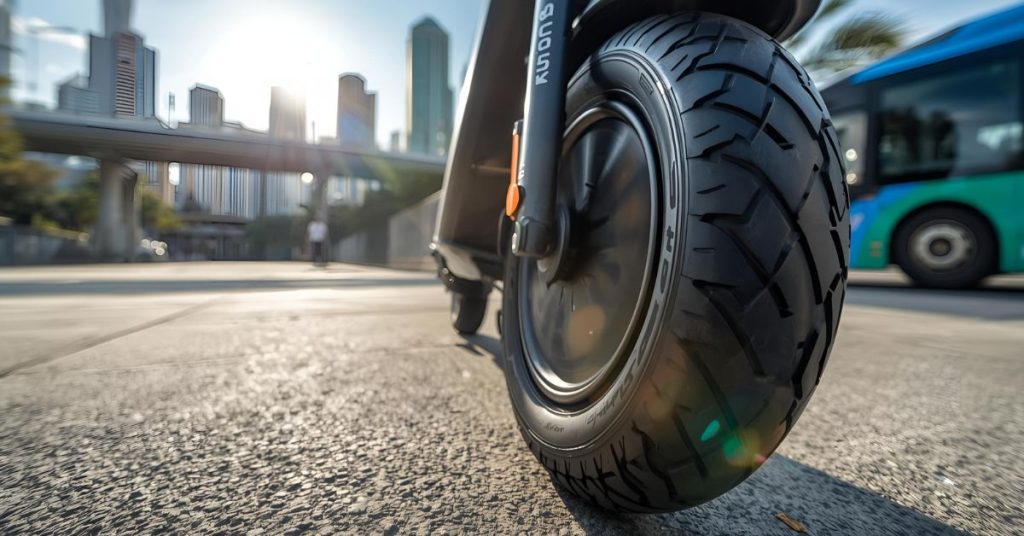
Tread influences how tyres connect to the ground and maintain traction in wet conditions. This matters more when the terrain varies, such as rough surfaces or off-road paths. Tread patterns shape how tyres channel water, maintain grip, and reduce rolling resistance.
A deeper tread pattern helps maintain control on rough terrain. Scooters used on wet conditions or gravel benefit from tyres with stronger tread blocks. Smooth-tread tyres suit inner-city commuters who value efficiency. The right design also improves the riding experience through more stable cornering and smoother transitions.
When it comes to electric scooter grip, tread plays a clear role in how safe the scooter feels under braking and turning.
Definitions:
- Tread: Patterns cut into the tyre for traction.
- Contact patch: The part touching the road.
- Rolling resistance: Energy needed to keep moving.
What are the most common tire sizes for electric scooters
Most scooters use 8 inch, 8.5 inch, or 10 inch tyres, depending on the style and purpose. Common tire sizes differ between commuter models and higher-powered machines. The typical size for your electric scooter appears on the outer tire and often matches the manufacturer’s intended geometry.
Commuter riders often use 8 inch pneumatic tyres because they offer a balance between agility and comfort. Larger 10 inch sets appear on long-range or fast models seeking better shock absorption and improved ride quality. Smaller wheels feature on compact, lightweight scooters where portability matters most.
These common tire sizes let riders pick a size that matches terrain, commuting distance, and scooter design.
Short table:
| Size | Ideal use | Notes |
|---|---|---|
| 8 inch | City trips | Responsive but less cushioned |
| 8.5 inch | Mixed terrain | Popular among e-scooters |
| 10 inch | Long distance | Better shock absorption |
 How pneumatic tyres compare with solid options
 How pneumatic tyres compare with solid options
Air-filled tyres feature flexible rubber and an inner tube or tubeless design. They deliver better shock absorption, helping scooter riders manage rough surfaces with less vibration. Solid tires remove air entirely, reducing puncture risk at the expense of ride comfort.
Pneumatic tires feature tread that absorbs bumps, resulting in smoother handling over cracks and uneven patches. However, they require maintenance because punctures can occur. Tubeless tires reduce inner tube issues and resist puncture better than traditional tube styles.
Solid tires are more durable and suitable for electric scooters used on debris-heavy routes. Yet they transfer more vibration into the frame.
Pros and cons list:
- Pneumatic: High comfort, more maintenance, strong traction.
- Solid: Low maintenance, tougher ride, fewer flats.
How to choose the right tire size for your electric scooter
The correct size depends on your scooter model, terrain, riding style, and the type of electric scooter design. Riders seeking a comfortable ride often choose larger sizes, while compact scooters rely on smaller tires to maintain portability. A quick scenario: a commuter travelling on mixed paths may choose a bigger tyre for smoother control.
Your decision should consider the scooter’s clearance; the size must be suitable for electric scooters built with specific fork widths. Larger tires generally offer better stability, but may affect handling responsiveness. Check your manual to match the size and tread to the scooter’s geometry.
If you’re unsure, choosing the right setup means matching rim diameter to a compatible outer tire and confirming the correct size markings.
Checklist:
- Confirm manufacturer specs.
- Match rim width to tyre width.
- Plan around terrain and daily distance.
How tyre pressure affects ride performance
Tyre pressure or tire pressure shapes traction, stability, and shock absorption. Running low air pressure softens the ride but increases puncture risk, especially near the rear tyre. Too much pressure reduces contact patch size, lowering grip in wet conditions.
Electric scooter owners should routinely check air pressure to maintain safe performance. Pneumatic tyres lose pressure slowly over weeks, especially in changing temperatures. Well-set pressure gives smoother handling, stable cornering, and longer tyre life.
A well-maintained pressure range also protects the inner tube and prevents uneven wear.
Simple guidance:
- Low pressure = softer ride, more puncture risk.
- High pressure = faster roll, less grip.
- Always follow recommended air pressure.
What to know about flat tyres and wear and tear
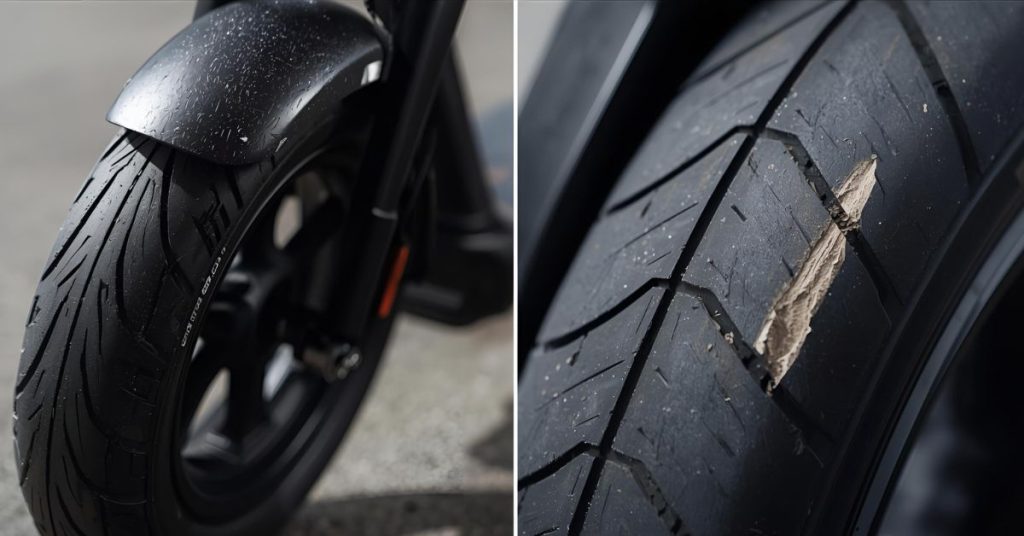
Flat tires occur from puncture events, worn tread, or incorrect tyre pressure. Recognising early signs helps prevent more serious issues. A slow leak usually means debris has pierced the outer layer, affecting both handling and the riding experience.
Inspecting wear and tear reveals when tyres are no longer safe. Smooth areas, cracking, or uneven patches often signal the need for replacement. Solid tires avoid flats but still experience stiffness-related degradation over time.
Replacing a tyre requires confirming the correct size and tread pattern to match your scooter.
Signs of wear:
- Bald tread spots.
- Frequent air loss.
- Cracks on the outer tyre surface.
When this may not be the right fit
Some riders use specialised scooters for off-road or heavy-duty work where larger tires are essential. In these cases, the typical commuter-focused tyre advice may not apply. Riders who operate in rough terrain daily may require reinforced pneumatic tires or thicker honeycomb solid options.
Scooters designed for stunt or sport use may need unique compounds not found in standard commuter lines. If you operate on soft dirt or heavy gravel, consult a technician before choosing the right model or size.
How to judge if you need this now or later
If your scooter feels unstable, vibrates excessively, or shows visible wear, now is the time to consider new tyres. Riders who notice worsening traction in wet conditions often benefit from updated tyres with improved tread.
If your usage is light and your commute smooth, you may wait until the tread thins or tyre pressure becomes hard to maintain. Track mileage and inspect tyres monthly to judge timing.
Where this connects to scooter maintenance and next steps
Tyre size links directly to safety, long-term handling, and overall scooter performance. Many riders upgrade their tyre setup during routine maintenance. A well-chosen size protects the scooter’s frame and enhances traction.
Your next step may involve confirming your model’s electric scooter tyre sizes, checking rim compatibility, or speaking with a specialist about pneumatic vs solid choices. Align tyre decisions with your broader scooter maintenance schedule for predictable performance.
Key points to remember

Featured Products