Electric scooter charging keeps your ride ready to use, but safe charging depends on the right charger, a suitable location and a battery that shows no signs of damage. Learning how to charge an electric scooter properly means following the scooter’s charging instructions, using the correct charger, checking the battery before charging and knowing when to stop. These simple charging habits can help you safely charge your scooter without turning routine charging into an avoidable safety problem.
Before You Charge Your Electric Scooter
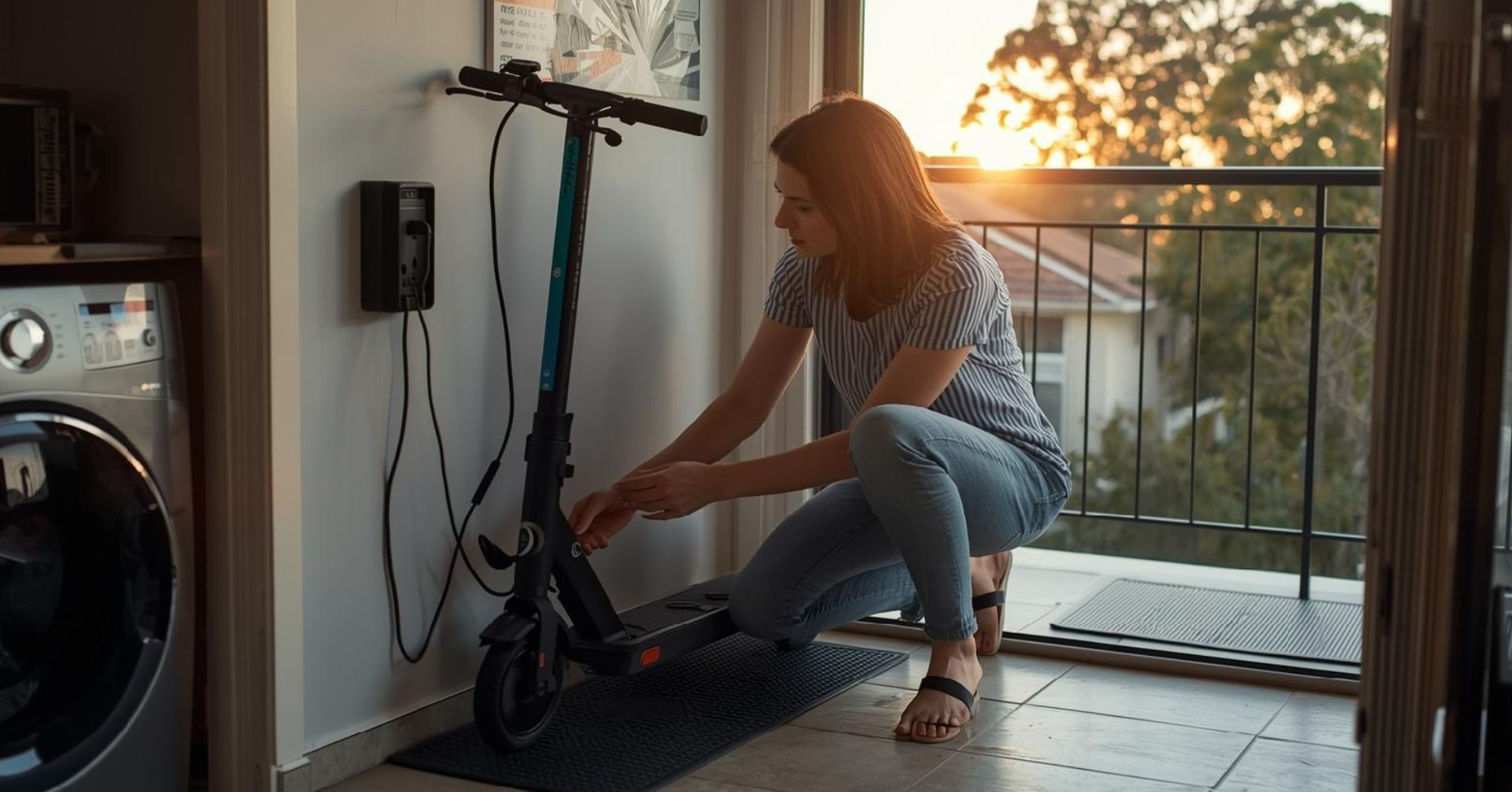
Before you charge your scooter, start with a quick visual check. These are owner-level safety precautions, not an instruction to open the battery or investigate internal electrical components.
- Check the scooter and electric scooter battery for cracks, damage, swelling or discolouration.
- Check the charger casing, cable, plug and connectors for cuts, exposed wires, severe kinks, melting or other damage.
- Look for signs of water ingress around the scooter, charging port or charging equipment.
- Make sure the charging port is visibly clean and dry.
- Let the battery cool after riding before you connect the charger.
- Move combustible clutter such as clothes, bedding, paper and curtains away from the charging area.
- Avoid charging if the battery, scooter or charger appears damaged.
Queensland Electrical Safety Office guidance recommends checking the scooter, battery and charging device for damage before charging. Queensland Fire Department guidance also says not to charge a battery or device that is hot or showing signs of damage.
Use the Right Electric Scooter Charger
The correct charger is one of the most important parts of safe charging. An electric scooter charger is not necessarily compatible just because the plug fits, so check the scooter manufacturer’s specific charging requirements before connecting it.
Use the original charger where possible, or a charger recommended by the manufacturer for your scooter model. Do not choose a charger based only on the plug, and do not experiment with a charger because its voltage or connector appears suitable.
- Check the scooter model: start with the manufacturer’s documentation for its specific charging requirements.
- Use the original charger: this removes uncertainty about whether the charger was made for the scooter.
- Check replacement chargers: use a charger recommended by the manufacturer rather than a generic alternative.
- Check the charger: Queensland safety guidance recommends checking that the charger has the Regulatory Compliance Mark.
Voltage matters because Queensland Electrical Safety Office guidance warns against using a charger with a different output charging voltage from the input charging voltage specified for the scooter or battery-operated equipment. If you cannot establish compatibility from the manufacturer’s information, do not plug the charger in to test it.

Where Is the Safest Place to Charge an E-Scooter?
The best way to charge an electric scooter is in a dry, well-ventilated location on a hard, non-combustible surface where you can monitor the scooter. Queensland Fire Department specifically recommends locations such as a garage or car port, while also advising that charging areas should be protected from weather and away from living areas and escape routes.
| Charging location | What to consider |
|---|---|
| Concrete or tiled area | A hard, non-combustible surface suited to charging. |
| Garage or protected car port | Queensland guidance identifies these as examples of well-ventilated charging locations. Keep the area dry, clear of combustible clutter and protected from weather. |
| Bedroom or living area | Avoid charging here because Queensland guidance advises against charging e-scooters in living areas. |
| Hallway, doorway or escape route | Avoid placing a charging scooter where it could obstruct an exit. |
| Near bedding, couches or curtains | Keep the scooter and charger away from soft furnishings and combustible materials. |
For Brisbane owners, wet weather is a practical consideration. Keep your scooter and charger away from rain and moisture, and if the scooter or battery has been exposed to water, follow the manufacturer’s instructions and current safety guidance before charging again.
How to Charge an Electric Scooter Step by Step
Once the scooter, battery and charger have passed the pre-charge check, the charging process should follow the manufacturer’s instructions for your scooter model. The basic sequence is to use the correct equipment, connect it as directed, monitor the charge and disconnect it when charging is complete.
- Place the scooter in the prepared charging area.
- Confirm the scooter and charger show no visible signs of damage.
- Make sure the battery has cooled after riding.
- Use the charger recommended by the manufacturer for that scooter model.
- Connect the charger according to the manufacturer’s instructions.
- Keep the charging area clear and remain home so you can notice abnormal behaviour.
- When the battery is fully charged, disconnect the charger according to the manufacturer’s instructions.
Do not assume that you need to run the battery completely empty before charging, or that every electric scooter battery should follow the same charging pattern. Specific charging instructions can vary by scooter model, so follow the manufacturer’s guidance rather than creating your own rule about charge cycles or charging time.

Should You Charge an Electric Scooter Overnight?
Charging is better scheduled for a time when you are home and able to notice a problem. Queensland safety guidance advises charging when you are home and not leaving lithium-ion batteries or devices charging while you sleep.
- Charging while you are home: preferred because you can respond if the scooter behaves abnormally.
- Plugged in overnight: avoid as a normal charging habit because you cannot monitor the scooter while asleep.
- Charging without supervision: avoid for normal household charging because a problem may not be noticed promptly.
Queensland Electrical Safety Office guidance also suggests a timer can help cut power to a charger if you forget. A timer does not make a damaged battery, unsuitable charger or unsafe charging location acceptable.
When You Should Stop Charging Your Electric Scooter
Stop charging your electric scooter if the scooter or battery shows signs that something is wrong. Do not continue charging to see whether an unusual symptom clears by itself.
- The battery or scooter becomes unusually hot while charging.
- The battery enclosure is swollen, bulging or cracked.
- You notice leaking or other signs of damage.
- You smell something unusual.
- You hear popping or hissing sounds.
- The scooter or charger shows discolouration or signs of overheating.
- The charger cable, plug or connector is damaged.
- You see smoke, flames or other signs of a fire.
Queensland Fire Department identifies heat, swelling, bulging, cracking, leaking, unusual smells and popping or hissing sounds as warning signs not to charge or use a lithium-ion battery or device.
If there is fire or smoke, move to a safe location and call Triple Zero (000). Do not touch a burning or severely damaged battery or device.
What to Do If Your Electric Scooter Is Not Charging
Charging problems can have more than one cause, so separate safe owner checks from professional diagnosis. A charger might be damaged or incompatible, while the charging port, battery or another electrical component might also need assessment.
- Warning sign present: if the battery is hot, swollen, damaged, leaking, smoking or making unusual sounds, stop charging and seek professional assessment.
- Charger damaged: stop using it. Do not substitute another charger unless its compatibility with the scooter has been established from the manufacturer’s requirements.
- No visible warning: follow the scooter manufacturer’s specific charging checks and inspect the charger and charging port visually.
- Fault persists: arrange professional diagnosis rather than probing electrical connections or opening the battery yourself.
A scooter that will not charge does not automatically mean the electric scooter battery needs replacing. A professional diagnosis can help distinguish a charger problem, charging-port issue or battery fault without guessing which component has failed.
MiniEVs states that its Brisbane battery service tests the battery pack before discussing replacement and can assess the charger and charge port as part of diagnosing a fault.
The MiniEVs maintenance guide is useful for routine checks around the battery, charger and charging port. It is not a substitute for professional assessment when charging problems involve damage, overheating or a suspected battery fault.

How to Look After Your Scooter Battery Between Charges
Battery care between charges is mainly about storing and handling the scooter in the way recommended for its battery system. Keep the battery away from unnecessary heat, moisture and physical damage, and use the manufacturer’s instructions for model-specific storage.
- Keep the battery in a cool, dry and sheltered place when the scooter is not being used.
- Keep the battery away from direct heat and moisture.
- Avoid dropping, crushing or otherwise damaging the battery.
- Keep the charging port protected from moisture.
- Follow the manufacturer’s instructions for storing your scooter when it will not be used for an extended period.
These practices are about battery safety rather than promising a particular battery life or lifespan. Do not assume that charging to 100 percent, running the battery completely empty or following a particular charge-cycle routine is required for every scooter.
When to Get an Electric Scooter Battery or Charger Checked
Electric scooter charging needs professional attention when a safe visual check cannot explain the problem, or when the battery or charger shows a warning sign. The key decision is whether the issue can be identified without electrical testing or battery work.
| What you notice | Safer next step |
|---|---|
| No visible damage but the scooter will not charge | Follow the manufacturer’s basic charging checks, then arrange diagnosis if the charging issue remains. |
| Charger is damaged or compatibility is uncertain | Stop using it and verify the correct replacement from the scooter manufacturer. |
| Battery is swollen, hot, leaking or making abnormal sounds | Stop charging and seek professional assessment. Do not open or repair the battery yourself. |
| Charging repeatedly fails after normal owner checks | Have the charger, charging system and battery assessed rather than guessing which component has failed. |
| Scooter has been damaged or exposed to water | Follow the manufacturer’s instructions and current safety guidance before resuming charging. |
MiniEVs’ Brisbane workshop at Mount Gravatt says it can test an e-scooter battery pack before replacement is considered and assess possible charger and charge-port faults. Bringing the scooter and charger together can help distinguish a battery problem from a charging-equipment problem.
For Brisbane owners, the MiniEVs battery replacement and repair page explains its diagnostic and repair service. The MiniEVs authorised repair centre page provides its current repair-centre information, while the Mt Gravatt service page provides the local workshop information.
Frequently Asked Questions
Can I use a different charger if the plug fits?
No. A matching plug does not establish compatibility. Check the scooter manufacturer’s specified charging requirements and use the original charger or a compatible charger recommended by the manufacturer for that scooter model.
Should I charge my scooter to 100 percent every time?
Do not assume that charging to 100 percent or deliberately running the battery completely empty is required for every scooter. Follow the specific charging instructions supplied for your scooter model rather than relying on a generic charging routine.
Is it safe to charge an e-scooter overnight?
Queensland safety guidance says to charge when you are home and not leave lithium-ion devices charging while you sleep. If you charge your e-scooter at night, the safer approach is to follow the manufacturer’s instructions and avoid leaving the device plugged in overnight without supervision.
What if my scooter gets hot while charging?
Stop charging if the scooter or battery becomes unusually hot. Heat accompanied by swelling, leaking, unusual smells, popping or hissing is a warning sign that needs professional assessment rather than further charging.
What should I do if my electric scooter will not charge?
Start with visual checks and the manufacturer’s charging instructions. If the charger is damaged or compatibility is uncertain, stop using it. If the charging issue remains after safe owner checks, arrange professional diagnosis rather than opening the battery or testing internal electrical connections.
If your scooter has charging issues or the battery shows a warning sign, stop charging and seek professional assessment. Brisbane riders can contact MiniEVs for battery diagnostics, repairs and scooter servicing through its current service options.

Featured Products